Energy math
Planning your energy beats planning your time. How you feel changes what you can do and how long it takes.
Micha
4 min read

It's easy to think that we have 24 hours a day, and as long as we use them wisely, we'll get lots done. A workday should generate a consistent output every time. Except that I've never had the same 8 hours twice. There are times when a week's work is done in 4 hours of hyperfocus. Other days, 8 hours pass, forcing tasks that just won't budge. Little progress, little gain.
To make matters worse, we're conditioned to think that time is money. This naturally implies that rest is a loss, rather than a necessary part of being alive. And I'm not just talking about sleep. Sleep is critical, but this is about active rest, purposefully slowing down to speed up and developing a rhythm that works for you.
Reading our energy
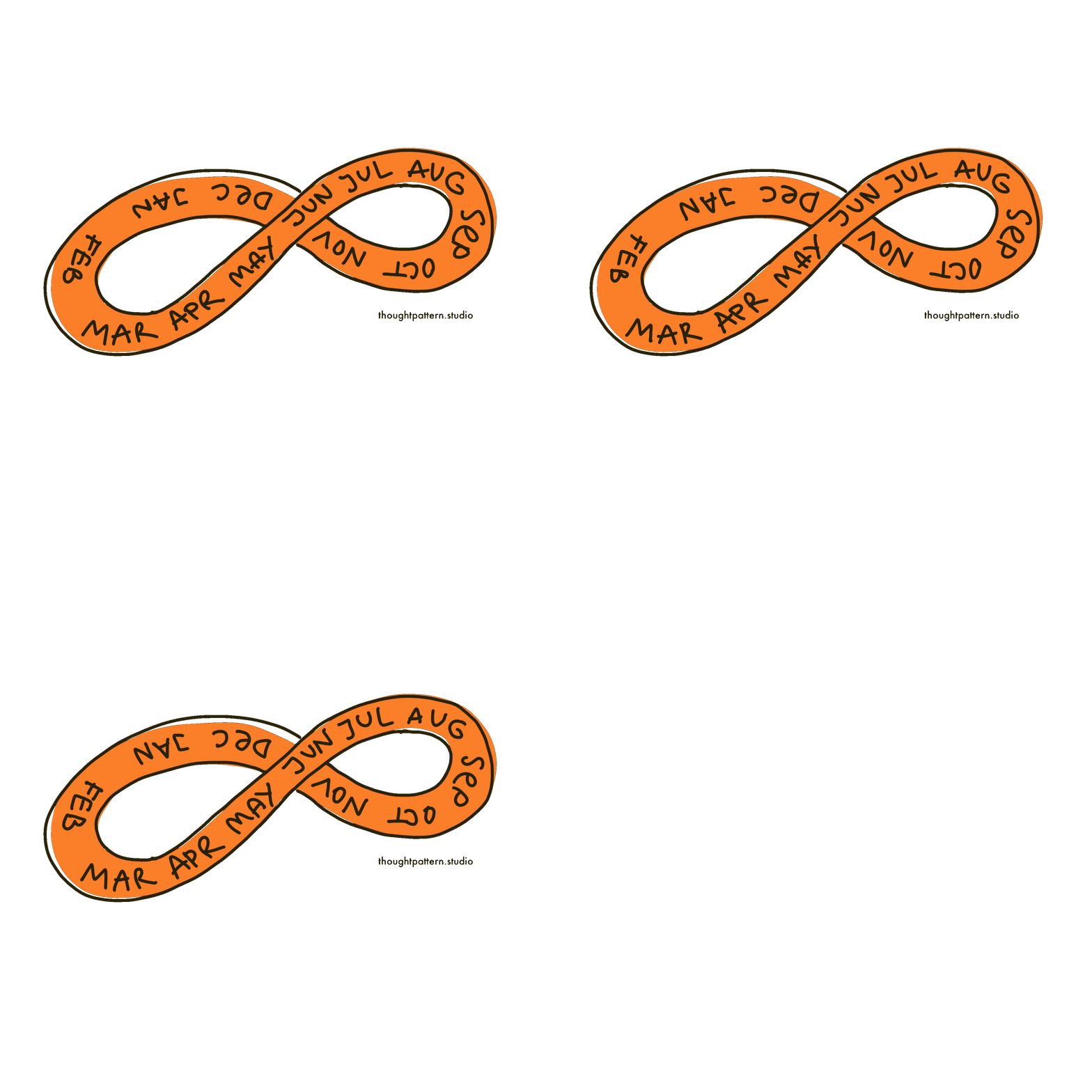
Like all living things, we exist in constant flux. Throughout the day, week, month and year, depending on what we eat, how much we rest, how much sunlight there is, etc. Nature has seasons, and so do we.
When it gets to December, many people feel drained. Hardly a shock - the winter is for slowing down. And not just by making everything a task for January - January is still winter. Unsurprisingly, depression spikes up around that time. Lots of expectations and pressure, paired with low energy.
We are mammals, but most mammals don't live at the same speed all year round. A lot of them rest or hibernate in winter; they move in cycles and respond to the seasons, their environment and their body's signals.
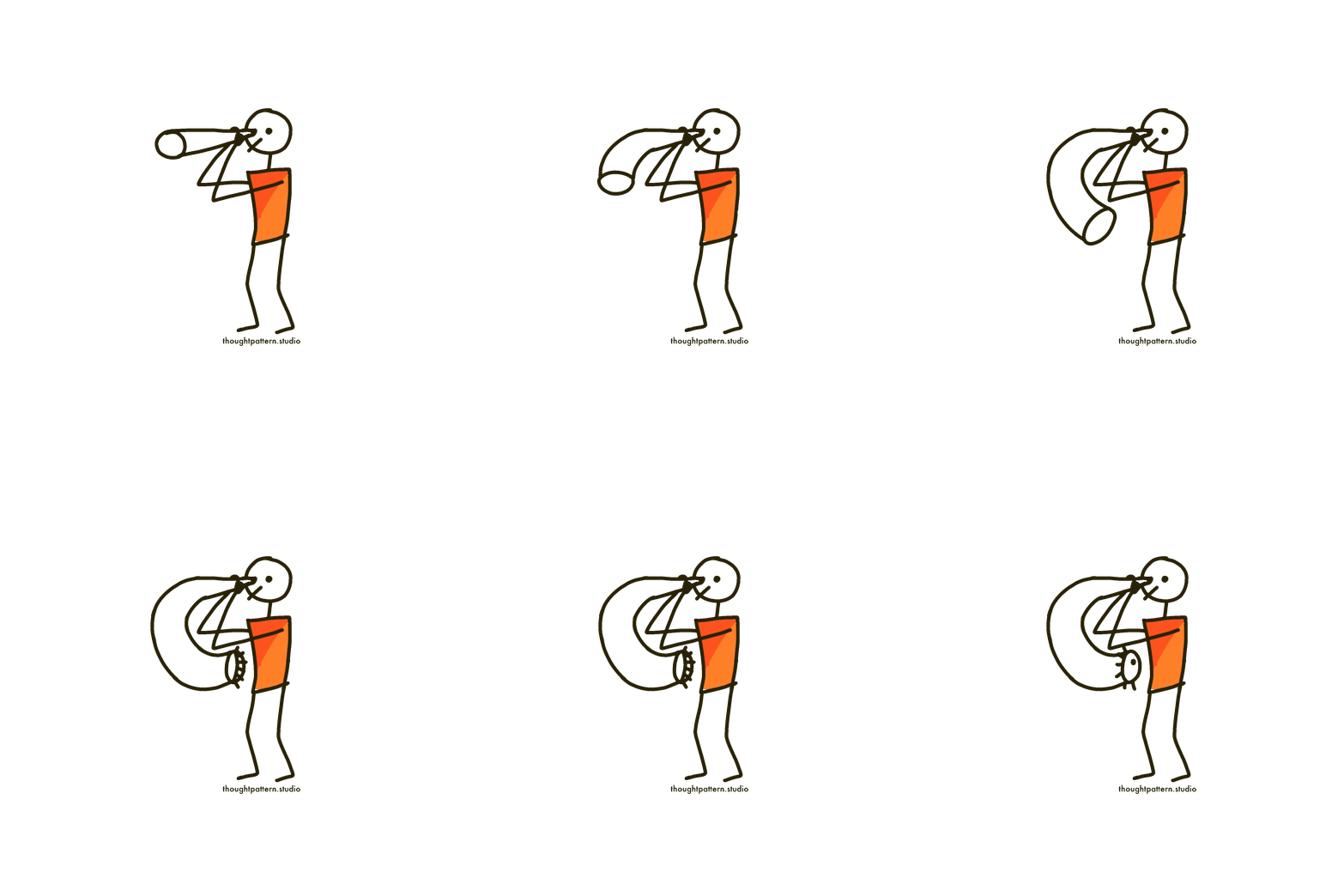
So let's start paying attention to internal signals and reactions. Begin to notice:
The ups: When you feel a boost of energy, what causes it? Why is that activity good for you? Is there something in it that resonates with the way your brain prefers to work? Maybe it's tactile, or it's outside, or it lets you get into deep focus. When you know what you're seeking, you'll be able to find many other activities that can deliver that for you.
The downs: When you're tired, what preceded it? In what ways did it require you to go against your ideal ways of working? Maybe there's a sensory element - you need quiet, but the task requires you to be in a loud space. Maybe masking is making you burn energy at double speed. Is the information you're dealing with in the best format for you - e.g. verbal instructions vs. written ones? Some of these might have reasonable alternatives and adjustments; others might just need more energy allocated to them, but that's OK, because we know to budget for it now.
You can get granular here. House chores are also not created equal. Maybe laundry is fun, but dishes aren't because of the sensory cost of touching wet food. Seeing one friend might be recharging, but another leaves you needing a rest. Even socialising is less black and white than we like to think.
Be honest with yourself and approach it with curiosity. This is a practice of noticing, rather than a one-off exercise. It gets easier each time.
Responding to our environment

The corporate world operates in an energy-blind way, a leftover from factory-style work that consistently broke people.
One person alone won't be able to change the entire system, but we all can choose to engage with it thoughtfully and change the narrative in our minds. Set our expectations realistically.
The concept of "hump day", for example, has been around since the 50s. Once you get over Wednesday, you're sliding towards the weekend. Power on until crashing, use the weekend as recovery, complain that there isn't enough rest, and then repeat. Very little about the common work week is regenerative.
Pick a different camel

This is where Energy Management comes in to gently tap Time Management on the shoulder and ask it to move over. If the week were a camel, I'd rather it be a two hump Bactrian; a steady pattern of high and low energy days.
For me, it looks like this:
Slower Mondays - fewer meetings and more heads-down time.
On Tuesdays, I can get lots done because I'm in the swing of things and can manage many interactions with no issues.
Wednesdays are naturally reflective and suited to focused tasks
Thursdays can be more proactive and, if needed, social.
Fridays serve as a ramp down, wrapping the week up and prepping the next.
For you, the peaks and troughs might be laid out differently. All that matters is that there's a rhythm of effort followed by activities that give your brain and body energy, followed by some reliable rest. Your body can't tell what day of the week it is. If you give it a steady pattern to follow, you might not have to crank it into action forcefully every Monday.
Magically, when we don't treat the week as one big push to get through, we have the capacity for a more active weekend - being more present for the people and tasks in our personal lives.
Until a shorter work week becomes universal, we can look for better ways to manage the energy we spend in the current system. And if more of us did that, it wouldn't be such a privilege.
All doodles are by me, and alt text is embedded.
Thought Pattern
Navigate
© Thought Pattern Studio Ltd 2026








Services
Get something useful every month
Tips and strategies on how to work with your thoughts so they serve your best interest